
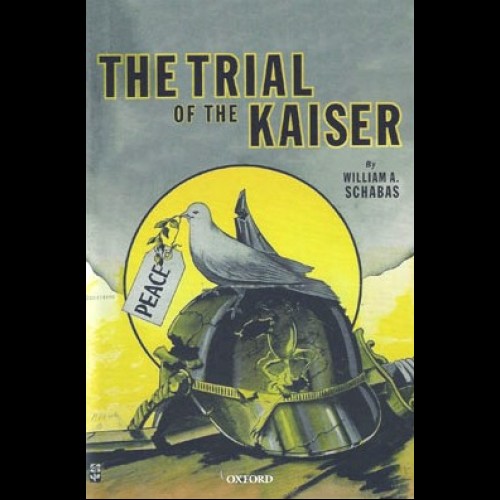
In the immediate aftermath of the armistice that ended the First World War, the Allied nations of Britain, France, and Italy agreed to put the fallen German Emperor Kaiser Wilhelm II on trial, in what would be the first ever international criminal tribunal. In Britain, Lloyd George campaigned for re-election on the slogan 'hang the Kaiser', but the Italians had only lukewarm support for a trial, and there was outright resistance from the United States.
During the Peace Conference, international lawyers gathered for the first time to debate international criminal justice. They recommended trial of the Kaiser by an international tribunal for war crimes, and the Americans relented, agreeing to a trial for a 'supreme offence against international morality'. However, the Kaiser had fled to the Netherlands where he obtained asylum, and though the Allies threatened a range of measures if the former Emperor was not surrendered, the Dutch refused and the demands were dropped in March 1920.
This book, from renowned legal scholar William A. Schabas, sheds light on perhaps the most important international trial that never was. Schabas draws on numerous primary sources hitherto unexamined in published work, including transcripts which vividly illuminate this period of international law making. As such, he has written a book which constitutes a history of the very beginnings of international criminal justice, a history which has never before been fully told.
This book, from renowned legal scholar William A. Schabas, sheds light on perhaps the most important international trial that never was. Schabas draws on numerous primary sources hitherto unexamined in published work, including transcripts which vividly illuminate this period of international law making. As such, he has written a book which constitutes a history of the very beginnings of international criminal justice, a history which has never before been fully told.
| Про книгу | |
| Видавництво, місто | Oxford University Press |
| Рік видання | 2018 |
| Кількість сторінок | 412 |
| Обкладинка | тверд |
-
1.199грн.
Схожі товари

Германия. В круговороте фашистской свастики
Книга известного отечественного социолога, теоретика и представителя правого национал-большевизма Н.В.Устрялова первые увидела свет в 1933 году. И в этом же году, как известно, совершенно законным, конституционным путем к власти пришел Гитлер (30 января 1933 года он был назначен канцлером). Исследование относится к ряду знаковых, на протяжении многих лет малодоступных трудов по истории немецкого национал-социализма. Книга снимает пелену таинственности со стремлений нацистских лидеров, заставляет читателя переосмыслить не только историю Германии после 1918 года, но и по-новому взглянуть на события 1930-х годов в контексте мировой истории. Перед нами немецкая национал-социалистическая революция - глазами обвиненного 14 сентября 1937 года в "шпионаже, контрреволюционной деятельности и антисоветской агитации" и в тот же день расстрелянного диссидента-радикала...

Могучая крепость. Новая история германского народа \2007-2008
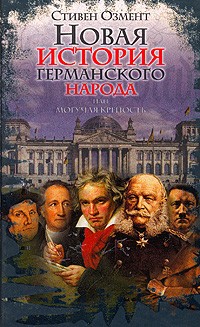
История германского народа - с древнейших времен и до наших дней... Разрозненные племена, лишь после долгих и жестоких войн покорившиеся Риму... Подданные Священной Римской империи - и десятков крошечных, "игрушечных" королевств и княжеств эпохи Возрождения... Нация, подарившая миру множество гениальных поэтов и писателей, художников, философов и ученых - но и дважды ввергавшая человечество в ад мировых войн. Как она складывалась и формировалась? Какова она в наши дни? Читайте об этом в книге известного современного историка Стивена Озмента! ..